Digital Thermostat Control Panel
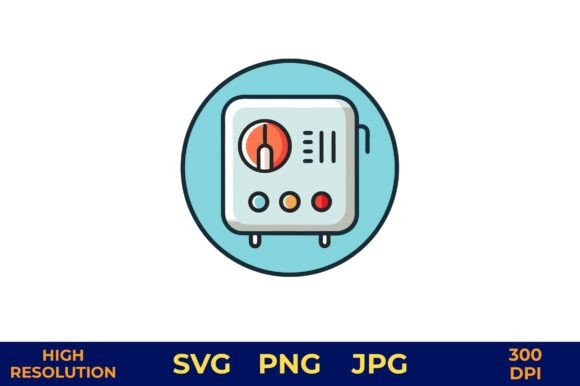
A Digital Thermostat Control Panel refers to a vector illustration depicting a modern, clean interface for temperature regulation—typically featuring numeric displays, intuitive buttons, adjustable setpoints, and minimalistic design elements. It is not a functional hardware device but a digital graphic asset intended for creative reuse across print and digital projects. This particular illustration is delivered as a high-resolution, scalable file set—including SVG, PNG, and JPG formats—with transparent backgrounds and dimensions of 4200 × 4200 pixels at 300 dpi.
Why Consider a Digital Thermostat Control Panel Illustration?
Designers, small business owners, educators, and DIY creators often seek authentic, industry-relevant visuals to communicate concepts related to smart homes, energy efficiency, HVAC systems, or technology interfaces. A well-crafted Digital Thermostat Control Panel illustration supports that need by offering a realistic yet stylized representation of modern climate control interfaces. Its value lies in visual accuracy, adaptability, and professional polish—not in physical functionality.
Key Benefits of Using This Graphic Asset
- Scalability and Quality: The included SVG file retains crisp clarity at any size, while the 4200px raster versions ensure sharp output for large-format printing—ideal for posters, signage, or presentation slides.
- Background Flexibility: Transparent backgrounds simplify layering onto diverse color schemes, photographs, or textured surfaces without manual editing.
- Broad Application Range: As noted, the design suits social media graphics, printable kits, wedding stationery (e.g., seating charts or table numbers), product mockups (mugs, t-shirts), branding materials, and educational handouts.
- Time Efficiency: Sourcing or designing a realistic thermostat interface from scratch requires technical knowledge of UI conventions and visual hierarchy. This ready-made asset reduces research, iteration, and production time.
Tradeoffs and Practical Considerations
While convenient, this asset has inherent limitations tied to its nature as a static, generic illustration. It does not reflect brand-specific UI patterns, accessibility features (e.g., high-contrast mode or screen reader compatibility), or real-world firmware behavior such as hysteresis, scheduling logic, or connectivity indicators. Users requiring precise fidelity to a particular thermostat model—like those used in technical documentation or certified training materials—should verify alignment with actual device interfaces before use.
Additionally, because it is a single-panel view, the illustration lacks contextual elements such as wall mounting, wiring diagrams, or integration with broader smart-home dashboards. If your project demands narrative context—e.g., showing how a thermostat interacts with sensors or HVAC units—you may need supplementary assets or custom composition.
When This Digital Thermostat Control Panel Fits Well
This illustration is especially useful when the goal is conceptual clarity rather than technical specificity. For example:
- Educators preparing HVAC fundamentals handouts for trade school students.
- Marketing teams developing infographics about home energy savings or smart-home adoption trends.
- Wedding planners incorporating subtle tech-themed motifs into “smart & sustainable” event branding.
- Print-on-demand creators designing themed planner stickers or printable checklists for home maintenance routines.
- Photographers or florists using clean, modern UI elements as decorative overlays in styled flat-lay compositions.
In each case, the asset functions as a visual shorthand—a recognizable symbol of digital temperature management that conveys intention without requiring explanation.
When Alternatives May Be More Appropriate
A different solution becomes preferable under several conditions:
- Brand Consistency Requirements: If your project must align precisely with an existing product’s visual language—such as Honeywell’s red accent buttons or Ecobee’s rounded typography—you’ll need either licensed brand assets or custom design work.
- Interactive or Animated Use: This is a static image. Projects requiring clickable prototypes, animated transitions, or responsive feedback (e.g., hover states or button press effects) demand interactive tools like Figma, Adobe XD, or custom code—not a downloadable PNG or SVG.
- Regulatory or Compliance Contexts: Technical manuals, safety guides, or installation instructions often require annotated diagrams, exploded views, or compliance markings (e.g., UL certification badges). A generic control panel lacks these details.
- Custom Functionality Representation: Illustrating unique features—such as geofencing, voice-command prompts, or multi-zone controls—may exceed the scope of a standard single-panel layout. Custom illustration or icon sets would better serve such needs.
Making an Informed Decision
To determine whether this Digital Thermostat Control Panel meets your needs, ask three questions:
- What role does the image play? Is it decorative, explanatory, or instructional? If it serves mainly as a visual anchor or thematic element, this asset is likely sufficient.
- What level of specificity is required? Do viewers need to recognize a real-world product, or is general familiarity enough? Generic representations work well for broad audiences; niche applications demand precision.
- What formats and resolutions will you use? Confirm that SVG scalability or 300 dpi raster output matches your workflow—especially if output includes embroidery digitizing, vinyl cutting, or offset printing.
Also consider licensing: this is a royalty-free digital product intended for both personal and commercial use, but always review the vendor’s terms regarding redistribution, resale of derivative works, or use in templates offered for sale.
Final Thoughts
A Digital Thermostat Control Panel vector illustration is a practical tool—not a substitute for engineering documentation or user interface development. Its strength lies in bridging the gap between abstract concepts and tangible visuals, supporting communication across disciplines where clarity, consistency, and quality matter. When selected with attention to context, scale, and purpose, it contributes meaningfully to projects spanning education, marketing, event design, and creative entrepreneurship. As with any design resource, its effectiveness depends less on inherent features and more on how thoughtfully it aligns with your specific objective.